



ERI SEE Participated in the 14th International Stakeholder Conference and the 30th Steering Group Meeting of EUSDR Priority Area 9 in Sofia
The Education Reform Initiative of South Eastern Europe (ERI SEE) participated in the 14th International Stakeholder Conference and the 30th Steering Group Meeting of Priority Area 9 “People and Skills” of the EU Strategy for the Danube Region (EUSDR), held on 28–29 May 2026 in Sofia, Bulgaria. The events brought together representatives of ministries, international organisations, education institutions, social partners and experts from across the Danube Region to discuss current developments in education, skills and labour market policies.
The 14th International Stakeholder Conference, organised by the Ministry of Education and Science of Ukraine and the Ukrainian Institute for International Politics, in partnership with the Federal Ministry of Labour, Social Affairs, Health, Care and Consumer Protection and the Federal Ministry of Education of Austria, the Ministry of Education and Research and the Ministry of Labour and Social Protection of the Republic of Moldova, and L&R Social Research, focused on the theme “Skills, Resilience and Integration: Shaping VET and Labour Markets in the Danube Region”.
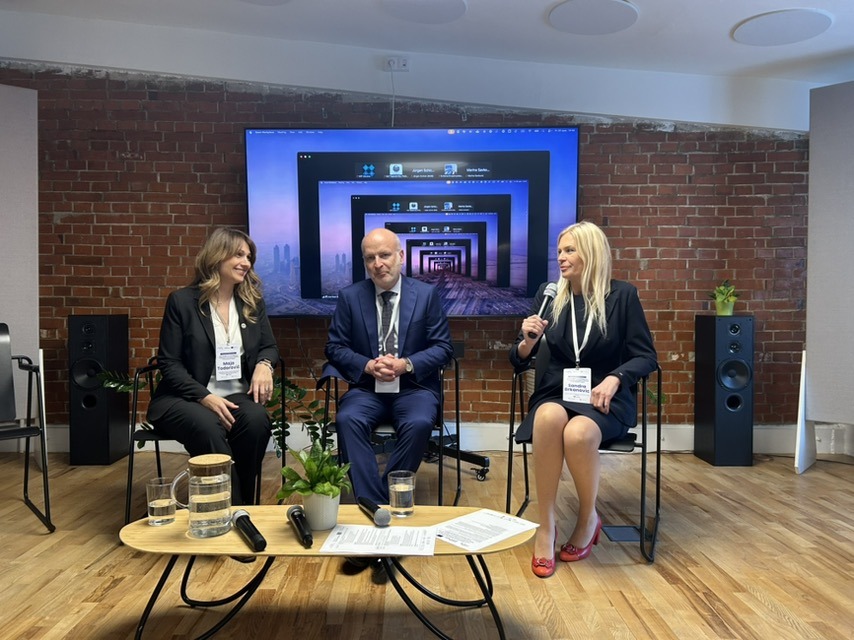
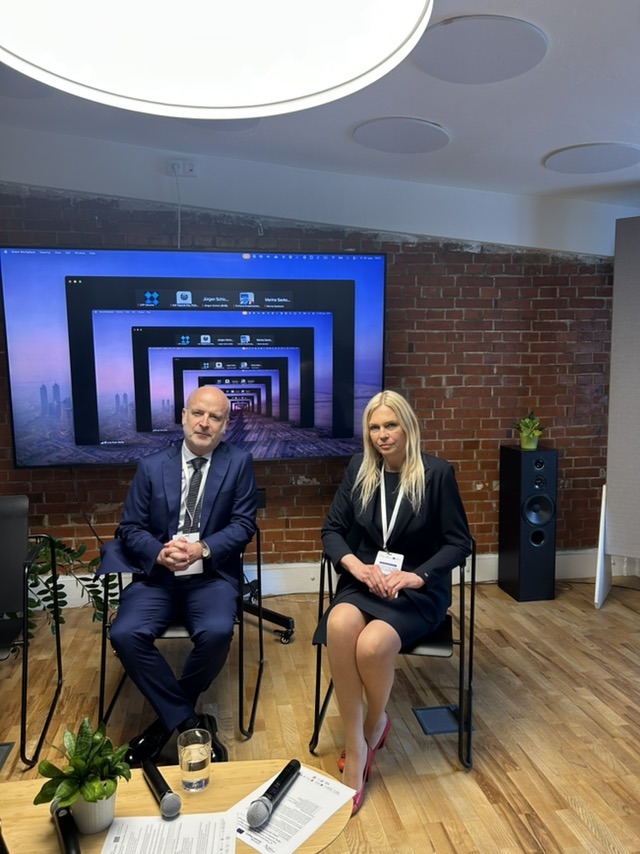
As part of the conference programme, ERI SEE Director Sandra Brkanović participated as a speaker in Working Group 2: “Strengthening Apprenticeships: Bridging Skills and Labour Market Needs”, moderated by Barbara Willsberger from L&R Social Research, Austria. The working group addressed key issues related to apprenticeships and work-based learning, including upskilling and reskilling systems, lifelong learning pathways, quality and scaling of apprenticeships, as well as inclusion and employment of veterans and other vulnerable groups.
In her presentation, Sandra Brkanović provided a regional overview of developments in vocational education and training (VET), with a particular focus on apprenticeships, work-based learning, upskilling and reskilling systems, and lifelong learning pathways. She highlighted the importance of stronger cooperation between education systems and employers, the development of occupational standards, recognition of prior learning, and regional mobility as key elements for addressing skills shortages and supporting labour market transitions in the context of the green and digital transition.
The conference also featured the participation of Maja Todorović, Head of the VET Department at the Institute for the Improvement of Education and Upbringing of Serbia, who represented the SEE VET Net regional network in Working Group 1 dedicated to public-private governance in VET. She highlighted the importance of stronger cooperation between schools, employers and public authorities, as well as the active involvement of employers in curriculum development, qualification standards and work-based learning. She also stressed the importance of strengthening the capacities of VET institutions and ensuring the continuous professional development of teachers in order to improve the quality and labour-market relevance of vocational education.
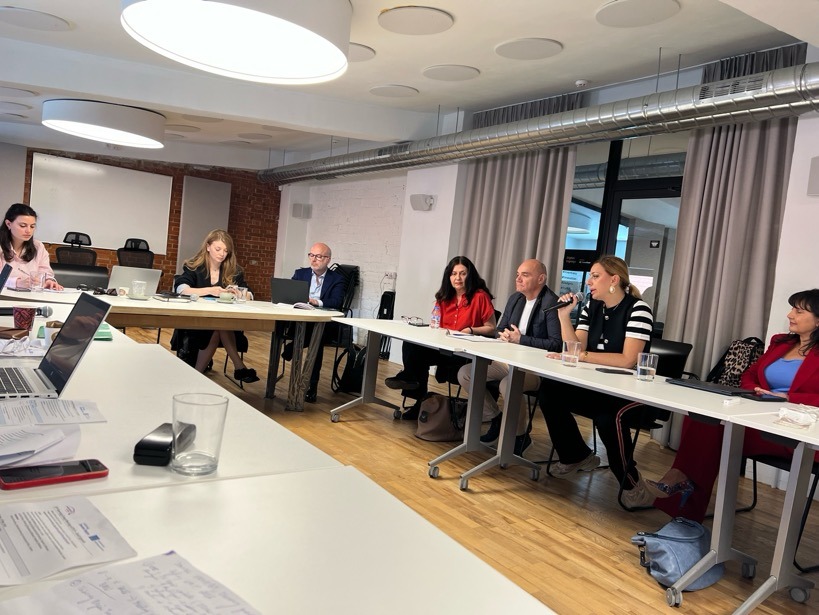
On 29 May 2026, Sandra Brkanović participated in the 30th Steering Group Meeting of Priority Area 9 “People and Skills”. During the session dedicated to updates from partner organisations, she presented the strategic directions and project development plans of ERI SEE during the current transition period, following the appointment of the new Director and the completion of several major regional projects. The presentation focused on the preparation of new regional initiatives, strengthened cooperation with key regional and international partners, activities within the Common Regional Market (MAP REA) framework, cooperation with the European Training Foundation (ETF) and the Austrian Agency for Education and Internationalisation (OeAD), and future priorities related to modernization of VET, quality assurance in preuniversity and university levels of education, adult education and lifelong learning, green and digital skills, and promotion of excellence in VET.
The Steering Group meeting was chaired by Roland Hanak from the Austrian Federal Ministry of Labour, Social Affairs, Health, Care and Consumer Protection, Jürgen Schick from the Austrian Federal Ministry of Education, Nataliia Atamanenko and Tetiana Iemets from the Ministry of Education and Science of Ukraine, and Anna Gherganova and Ludmila Pavlov representing the Republic of Moldova. The meeting was moderated by Nadija Afanasieva from the Ukrainian Institute for International Politics. Representatives of the Ukrainian Institute for International Politics also facilitated several conference sessions and working groups, contributing to the overall coordination of the event.
The Steering Group meeting also provided an opportunity to exchange updates with key EUSDR PA9 stakeholders and partner organisations. Among the speakers were Gordon Purvis from the European Training Foundation (ETF) and Jürgen Schick from the Austrian Federal Ministry of Education, members of the ERI SEE Consultative Body, who shared updates on ongoing European initiatives and developments relevant to education, skills and lifelong learning in the Danube Region.
The two events provided an important platform for policy dialogue, exchange of experiences and strengthening cooperation among stakeholders working to improve education, skills development and labour market policies across the Danube Region, while also contributing to the development of future regional initiatives and partnerships.
