
ERI SEE Participated in the BuildSkills Academy Masterclass in Brussels, 18-19 June 2026
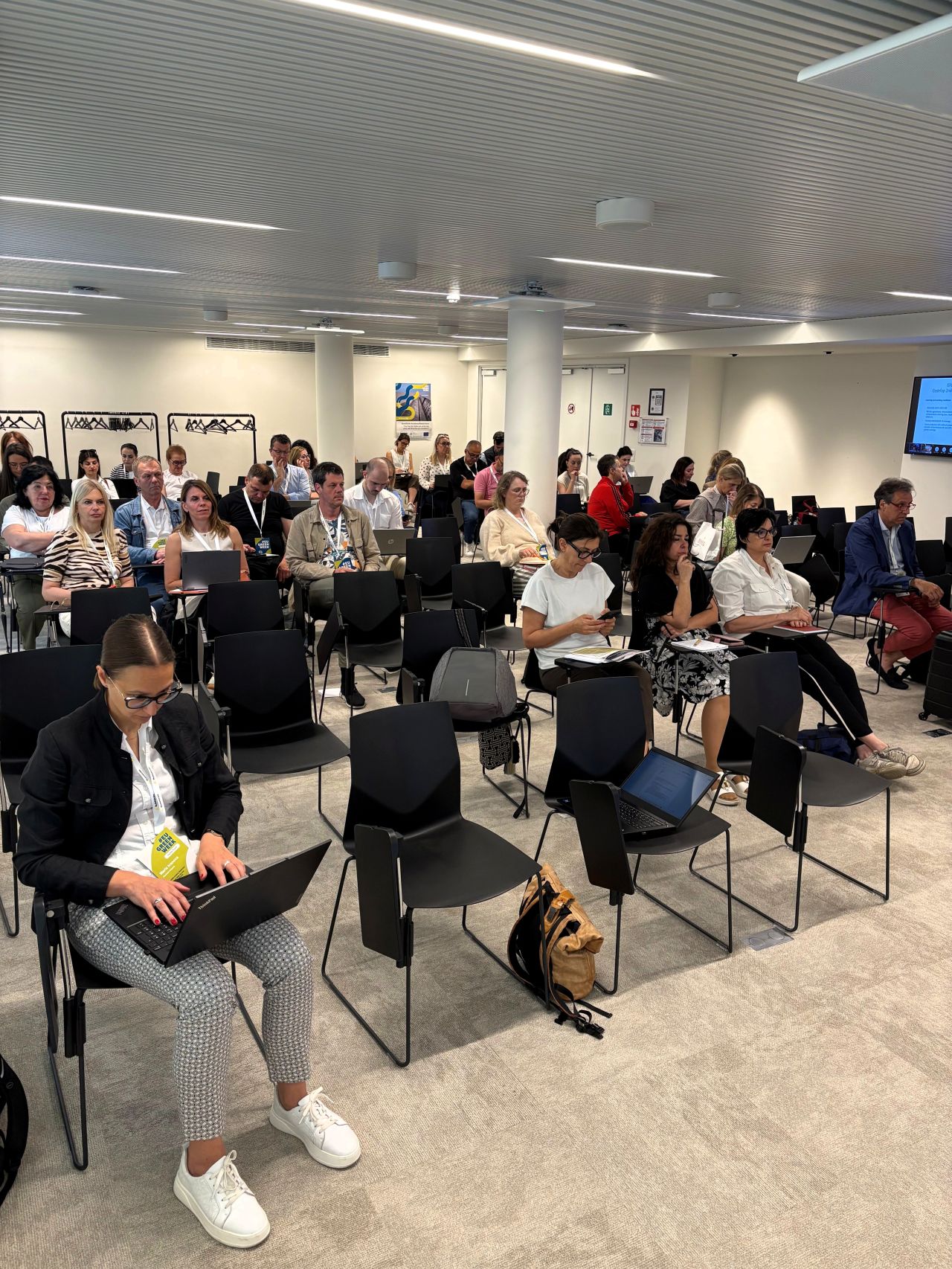
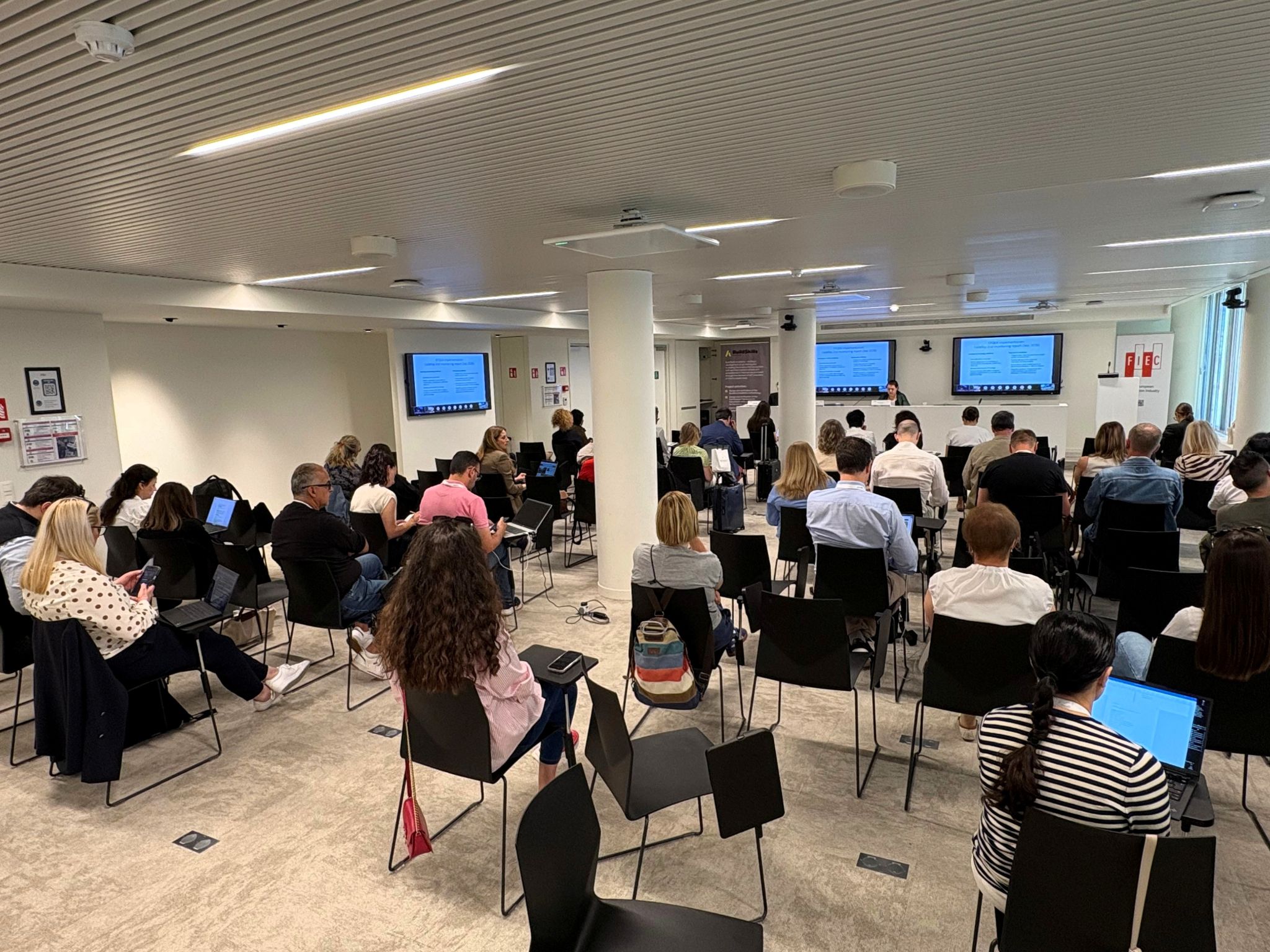
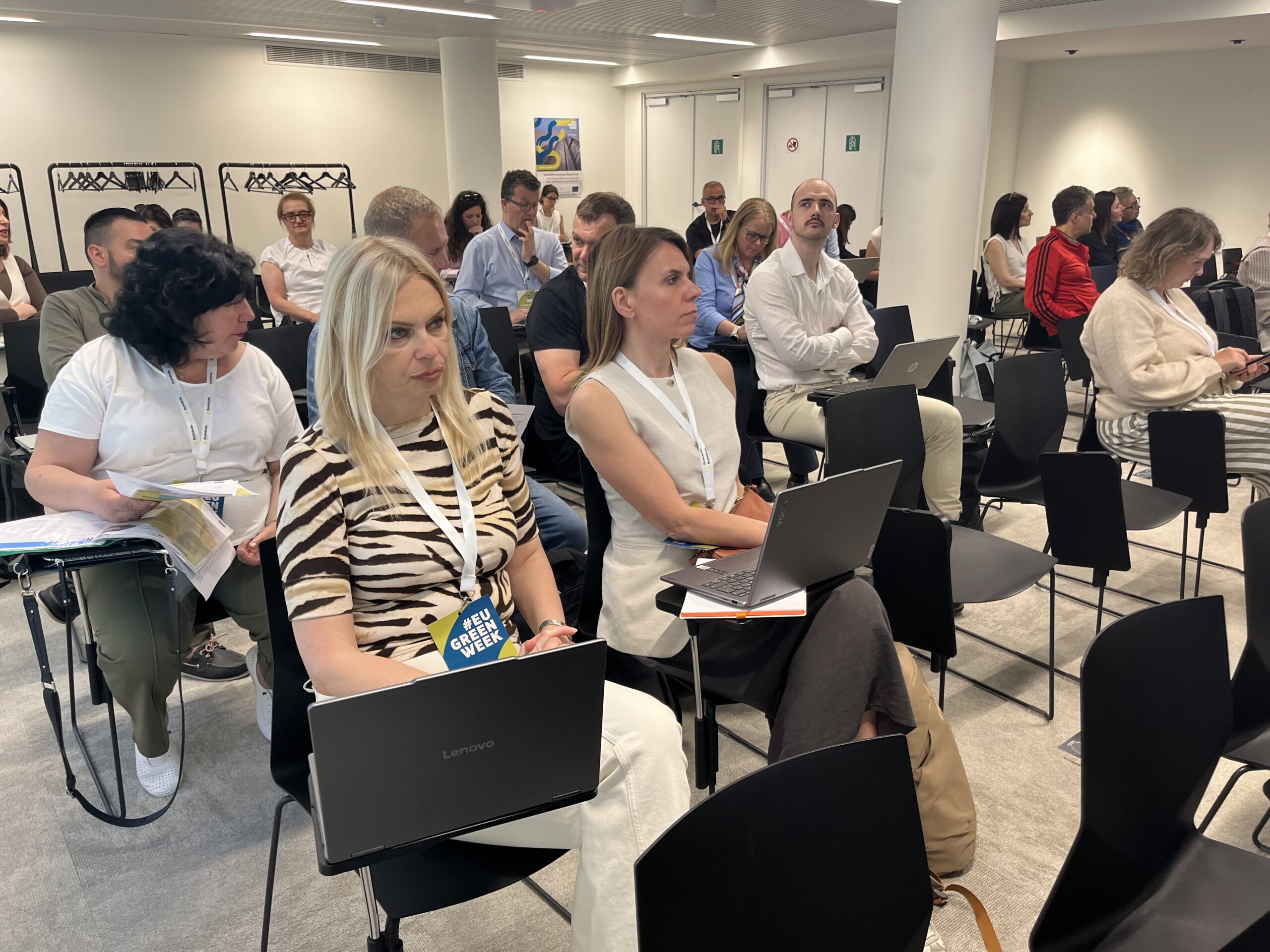
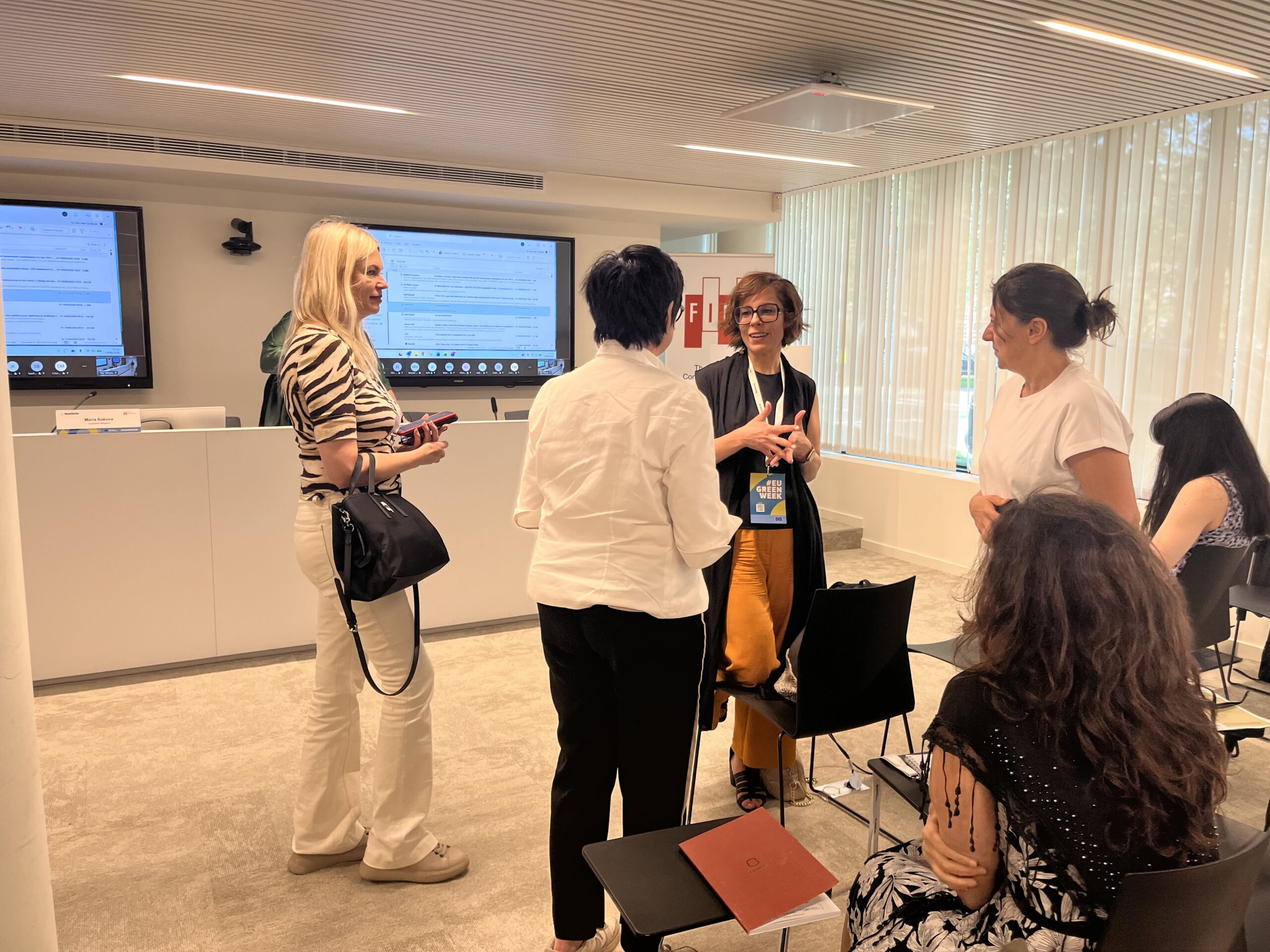
The Education Reform Initiative of South Eastern Europe (ERI SEE) participated in the BuildSkills Academy Masterclass “The Pact for Skills and What New Skills Will Drive the Twin Transition?”, held on 18–19 June 2026 in Brussels, Belgium. ERI SEE was represented by Director Sandra Brkanović and Project Coordinator Marina Papović. ERI SEE attended the event at the invitation of CirEkon d.o.o., the Serbian partner in the BuildSkills Academy project.
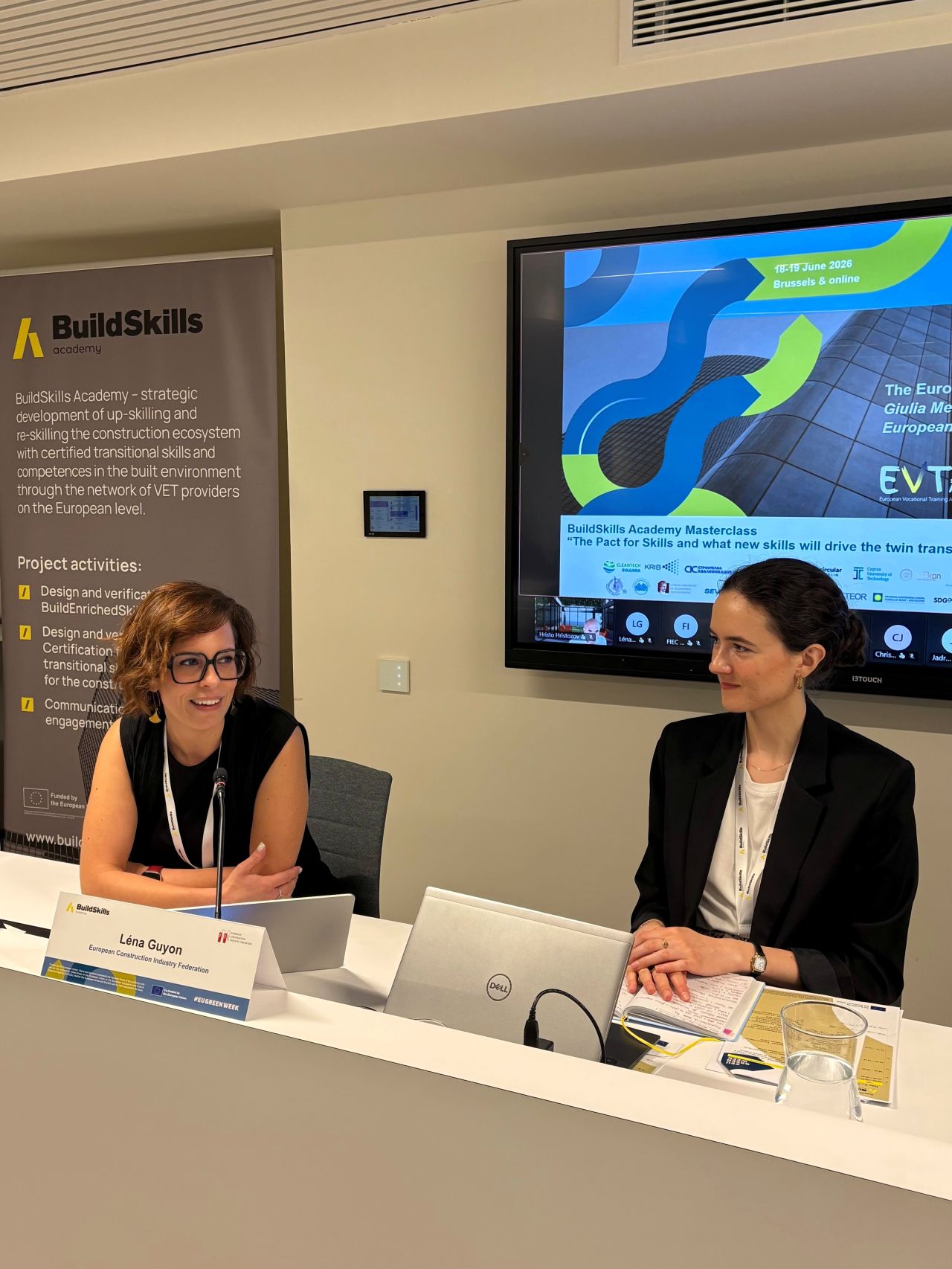
The Masterclass was organised within the framework of the BuildSkills Academy – Centre of Vocational Excellence (CoVE) project, led by Cleantech Bulgaria, and co-hosted by the European Construction Industry Federation (FIEC). The event brought together representatives of European institutions, vocational education and training (VET) organisations, industry, social partners and skills experts to discuss skills development in the construction sector, with a particular focus on the twin green and digital transition. The BuildSkills Academy supports the development of green and digital skills through innovative training programmes and approaches fostering cooperation between industry, education providers and policymakers.
The event was opened by Domenico Campogrande, Director General of FIEC, and Maria Nakova, Strategic Development Manager at Cleantech Bulgaria and Project Leader of the BuildSkills Academy CoVE, who presented the objectives of the Masterclass and its focus on skills development for the twin transition.
The opening policy session featured Felix Rohn (DG EMPL) and Roman Horvath (DG GROW) of the European Commission, who presented key European initiatives related to skills development, including the European Skills Agenda, the Union of Skills, EU Skills Academies, and the Skills Portability Initiative.
A dedicated session on vocational excellence and partnerships for a sustainable future was delivered by Susanne M. Nielsen from the European Training Foundation (ETF). The implementation of the Pact for Skills in the construction sector was subsequently discussed by representatives of FIEC, the European Federation of Building and Woodworkers (EFBWW) and the European Builders Confederation (EBC), who presented key commitments and success stories, insights from Skills Intelligence for construction activities and the implications of the Pact for companies, VET providers and workers.
The programme also included a presentation by Maria Nakova on the BuildSkills Academy approach to skills development for the twin transition, covering the project’s thematic areas, target occupations and identified green and digital skills gaps. Additional discussions addressed skills needs for the built environment of tomorrow and the role of vocational excellence in supporting sustainable, people-centred and smart transitions.
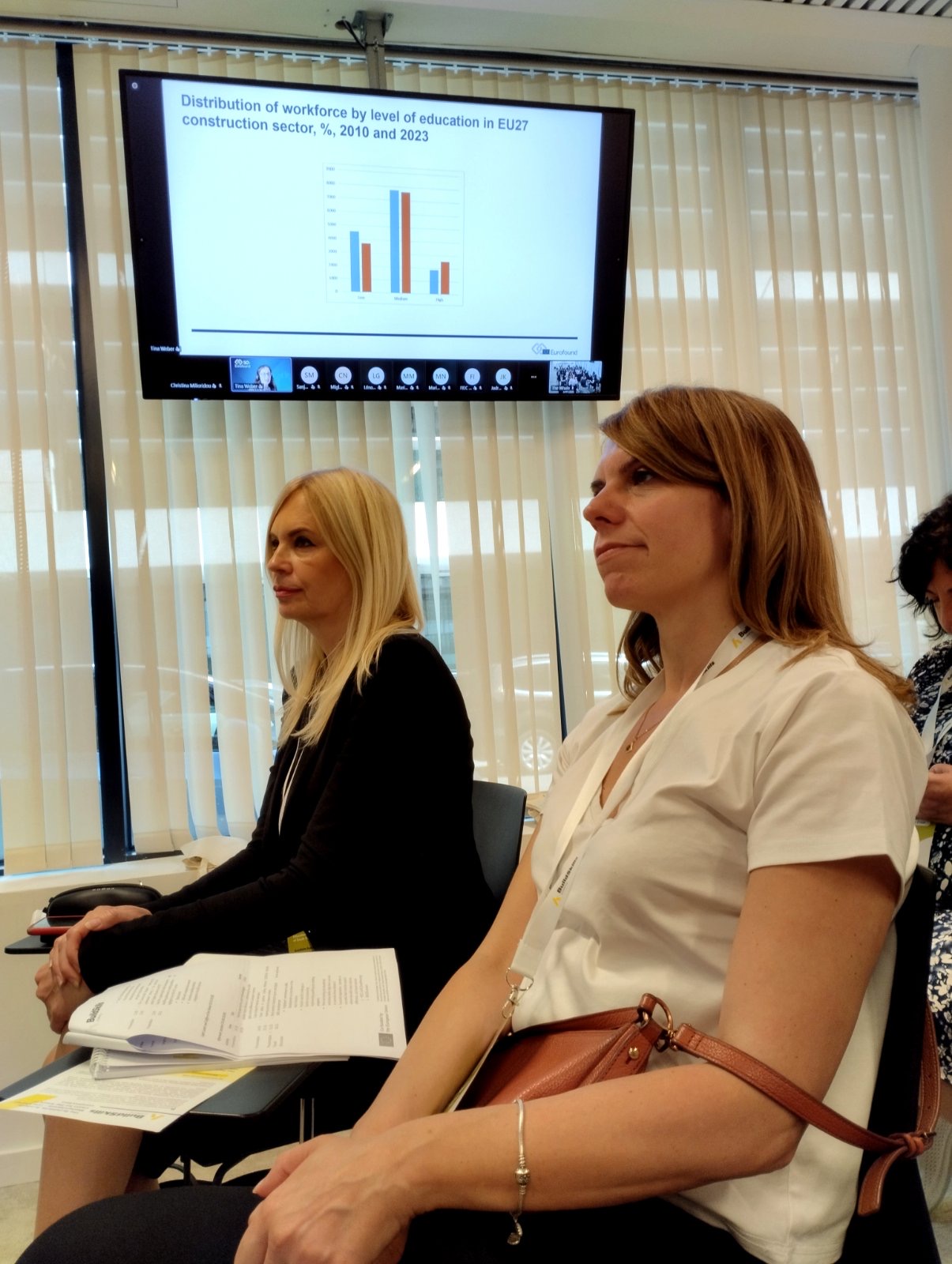
Particular attention was given to the future of the construction workforce. Tina Weber from Eurofound presented findings from the report Building on Growth Potential: Preparing the Construction Sector for the Twin Transitions, focusing on how workforce profiles may evolve over the next five to ten years, competencies that should be prioritised in training pathways and critical skills gaps affecting the sector. Participants also explored tools and methodologies developed within the BuildSkills Academy project, including approaches aligned with the ESCO taxonomy and the EQAVET framework, as well as reskilling pathways and enriched VET courses for the existing workforce.
Further contributions were delivered by Raphaële Coulon from FIEC, who presented the Construction Blueprint initiative, Irina Jemeljanova from CEDEFOP, who addressed the scaling of effective training across countries, and Emilio Dogliani from EfVET, who shared examples of training approaches and methodologies that have proven effective in addressing skills gaps across different European markets. The programme also featured exchanges of practices and project experiences related to green and digital skills development and cooperation between employers, training providers and other stakeholders.
The second day focused on skills validation, apprenticeships and certification systems. Stefano Tirati from the World Alliance for Microcredentials (WAM) presented opportunities for skills validation through formal education, recognition of non-formal learning and micro-credentials. Anna Barbieri from the European Alliance for Apprenticeships (EaFA) discussed the role of apprenticeships, dual education and work-based learning in supporting future skills development. Representatives of the Cyprus Certification Company (CCC) and IVEPE-SEV presented the BuildSkills Academy certification system, including certification frameworks for transitional skills, curricula and training materials. The programme also featured a presentation by Giulia Meschino, Secretary General of the European Vocational Training Association (EVTA), who addressed emerging trends and challenges shaping vocational education and training policy in Europe, highlighting ongoing discussions on the future direction of VET systems and skills development.
The Masterclass concluded with an interactive discussion focused on skills recognition, alignment between industry needs and VET provision and importance strengthening cooperation between employers and VET providers in construction sector. The session enabled participants to exchange perspectives on barriers and enablers related to skills development and collaboration within the sector.
The event provided an opportunity to gain insights into current European initiatives and policy developments related to vocational excellence, lifelong learning, apprenticeships, micro-credentials, skills validation and workforce development. The discussions and examples presented during the Masterclass are relevant to ongoing efforts to strengthen education and training systems and support skills development for the green and digital transition across South Eastern Europe.
