
ERI SEE Participated in the Launch of OeAD’s VET2WORK Project, Durres, Albania, 9–10 November 2026
ERI SEE participated in the launch of the VET2WORK – Matching VET to Labour Market Needs in Tourism and Agriculture in Albania, Kosovo, Montenegro and North Macedonia project, organised by OeAD in Durrës, Albania, on 9 November 2026. The launch was followed by a Regional Policy Dialogue on work-based learning on 10 November.
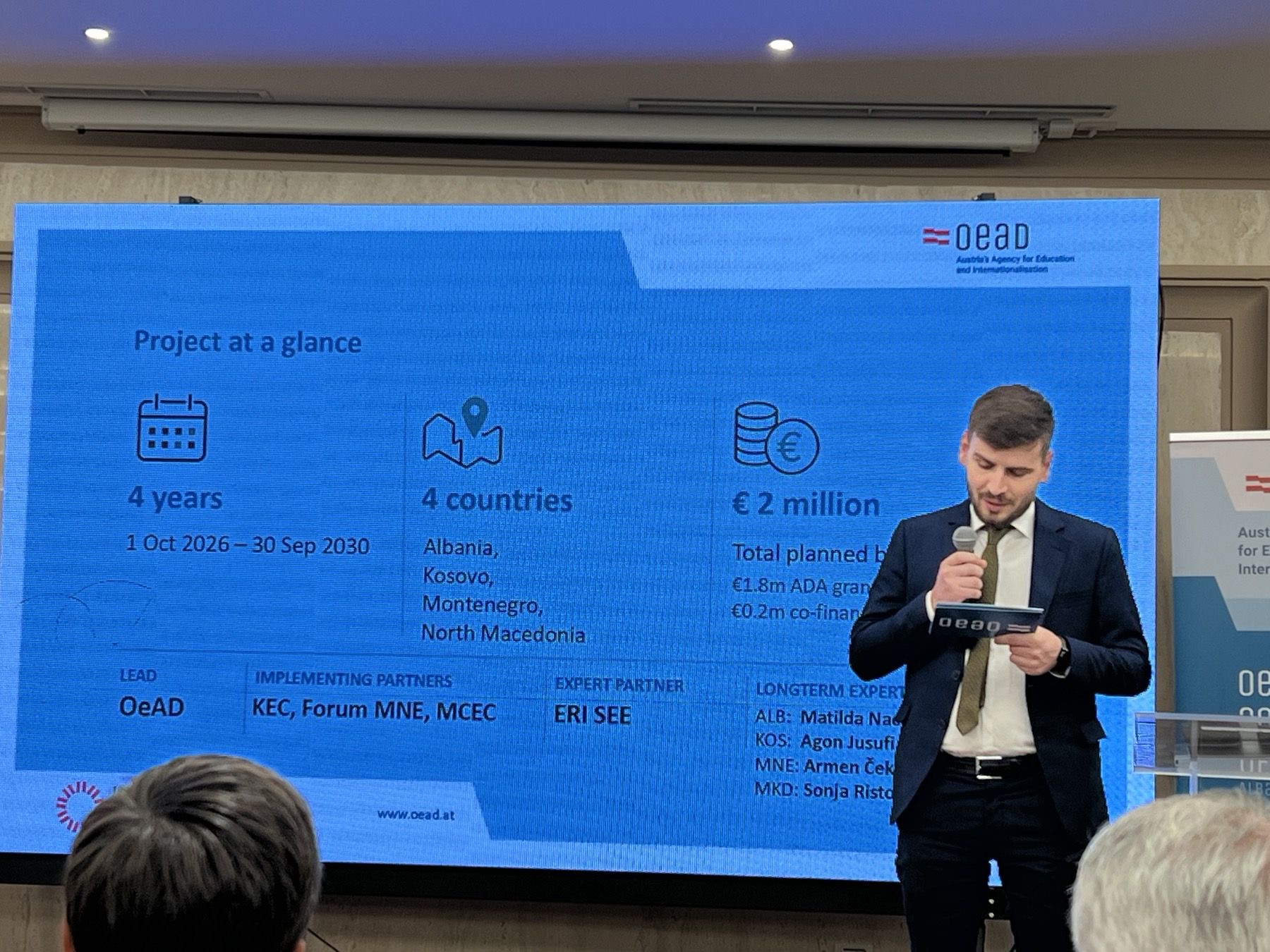
The four-year project (2026–2030), led by OeAD – Austria’s Agency for Education and Internationalisation and funded by the Austrian Development Agency (ADA), aims to improve the relevance and quality of vocational education and training (VET) in tourism and agriculture, strengthen cooperation between VET providers and businesses, and promote inclusive access to VET in Albania, Kosovo, Montenegro and North Macedonia.
The project is expected to reach approximately 11,700 VET students, 1,700 teachers and trainers, 160 in-company mentors and 1,300 other stakeholders, with activities involving 16 pilot VET schools across the four countries.
ERI SEE is expected to contribute to the project as an expert partner, drawing on its extensive regional experience in VET cooperation. Its expertise is expected to be particularly relevant to activities related to the development of occupational standards, qualification standards and VET curricula, areas in which ERI SEE has established considerable experience and recognition across the region.
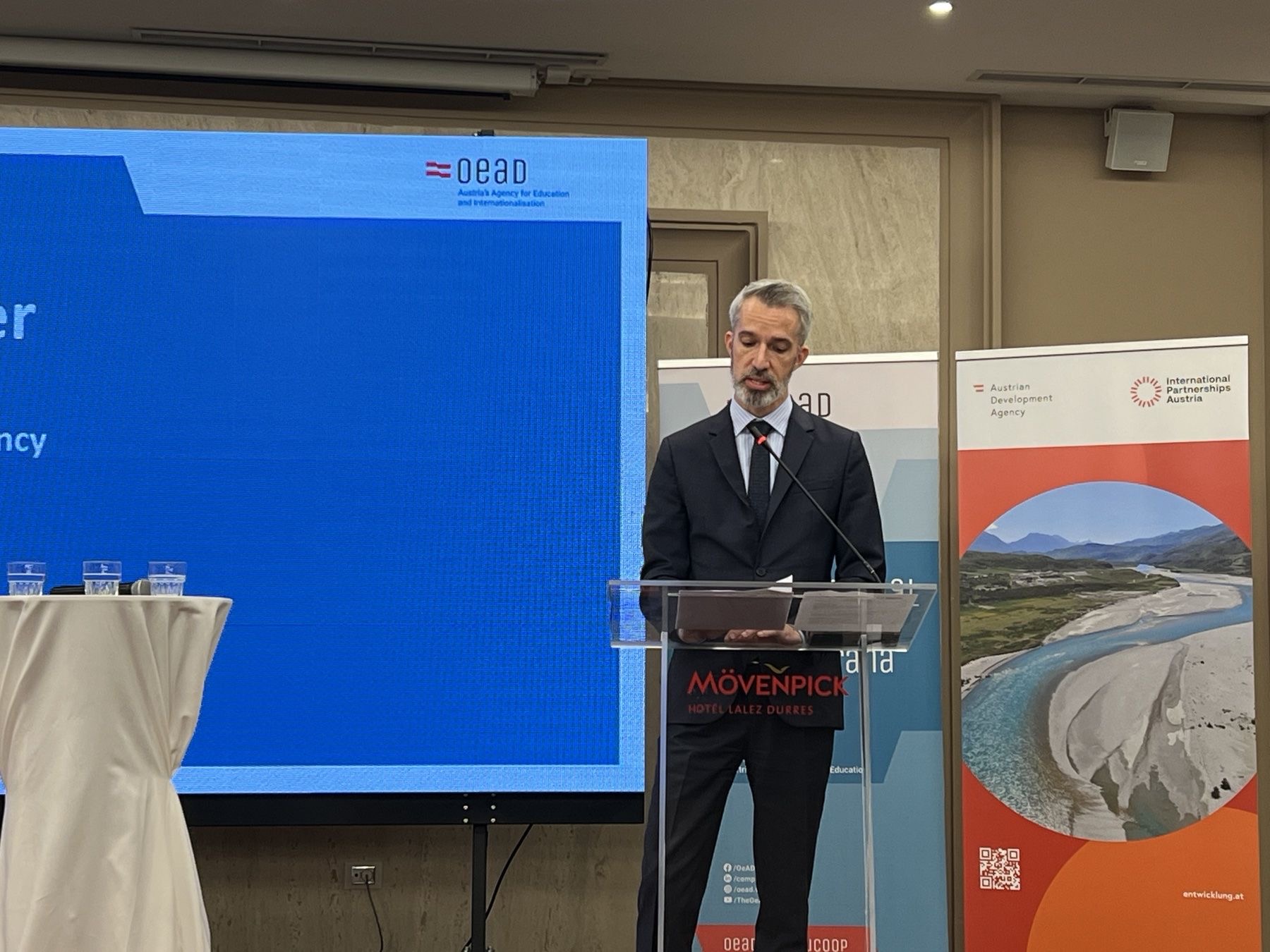
The launch event brought together representatives of Austrian and partner-country institutions. The opening addresses were delivered by H.E. Monika Zach, Ambassador of Austria to Albania; Stavri Lako, Director of the Directorate of Vocational Education and Training Policies and Inspection of Albania; Bernd Brünner, Managing Director of the Austrian Development Agency; and Jakob Calice, Managing Director of OeAD.
The project was presented by Elisabeth Augustin, Head of Department at OeAD, and Shtjefen Jaku, Local Project Manager at OeAD. Monica Wurzer, Senior Project Manager at OeAD, also contributed to the programme, presenting the project’s shared vision for 2030.
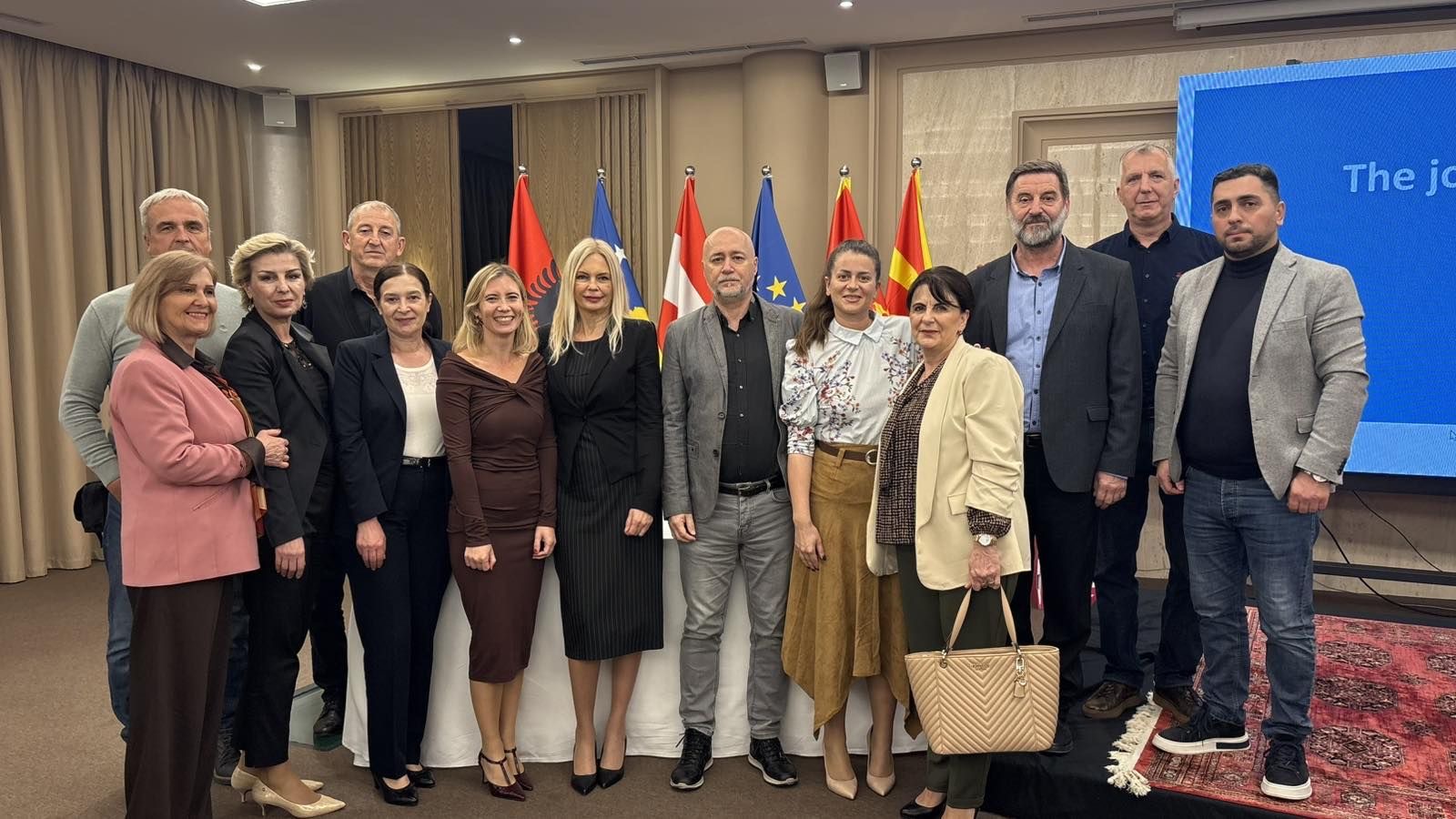
The event brought together a broad range of stakeholders from the four participating countries, including representatives of ministries responsible for education, employment, tourism and agriculture; national VET and employment agencies; vocational schools and training centres; chambers of commerce; and sectoral committees. Representatives of international organisations and development partners, including the European Union, Swiss Cooperation, GIZ, Helvetas, UNDP, KfW, Swisscontact and the Regional Challenge Fund, also took part.
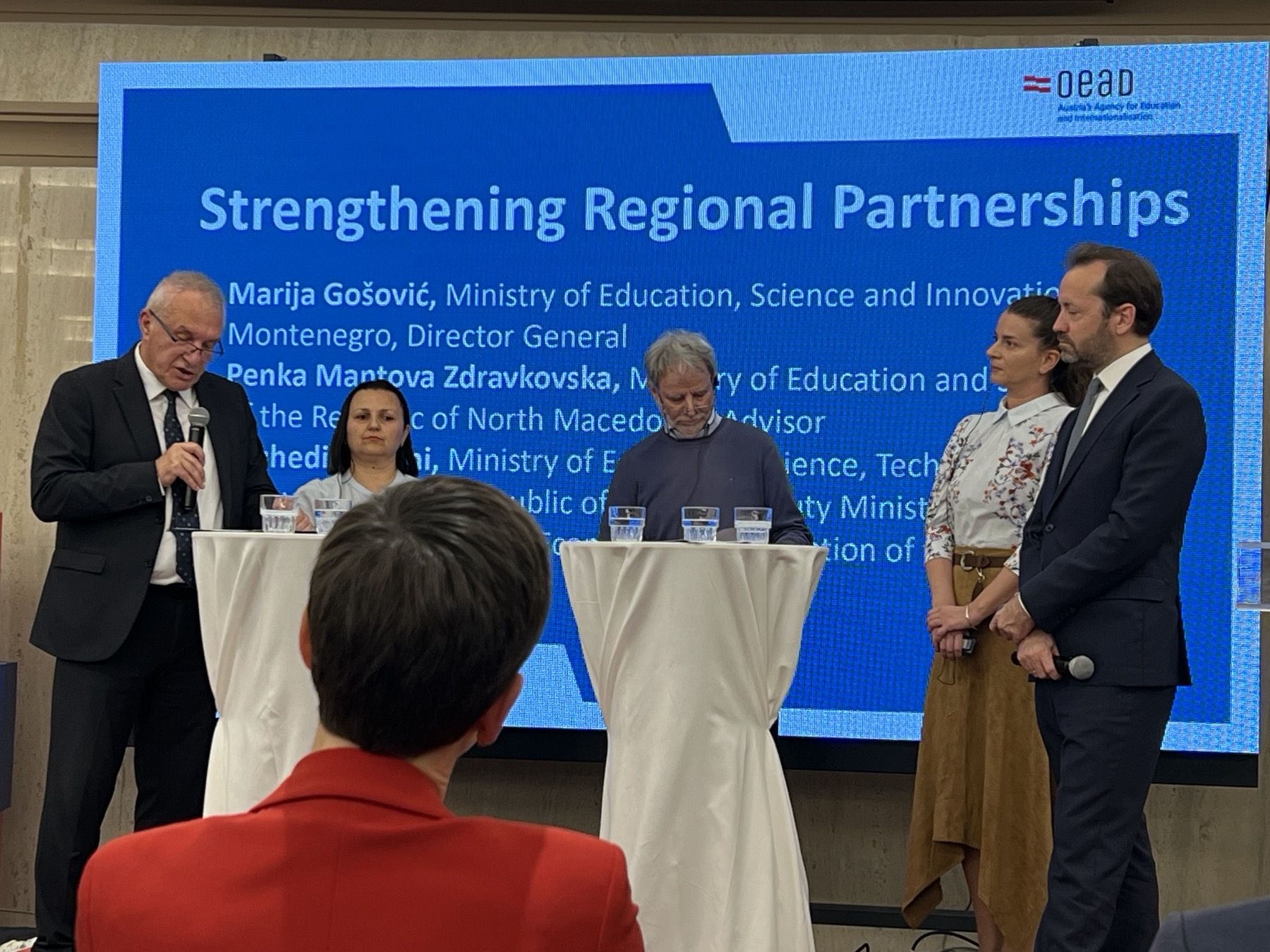
The second day focused on the Regional Policy Dialogue, “Strengthening Work-Based Learning in the Western Balkans – From 4 Countries to 1 Regional Agenda”. The discussion brought together representatives of the four participating countries and regional organisations to exchange experiences, identify common challenges and explore opportunities for stronger regional cooperation in work-based learning.
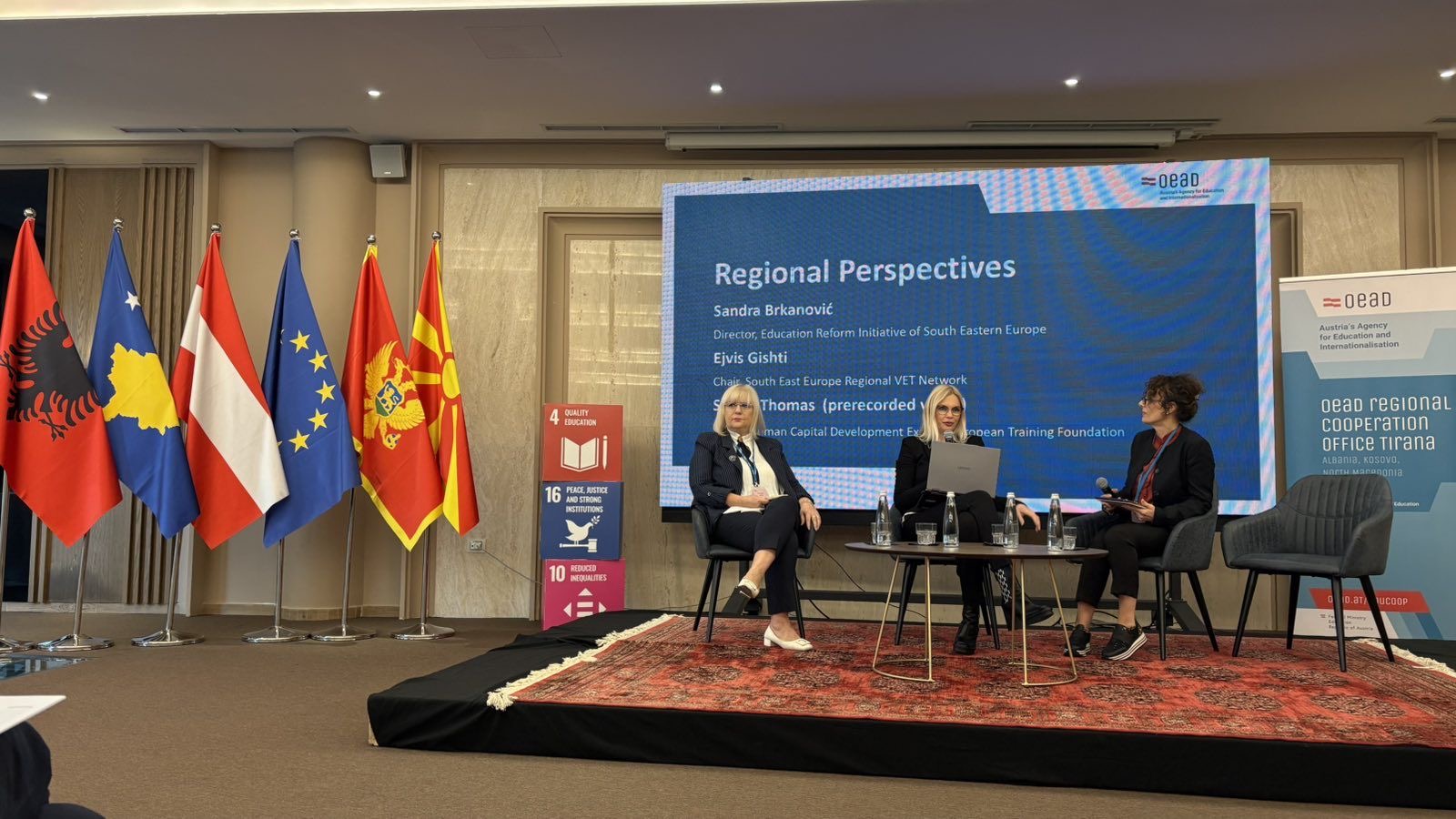
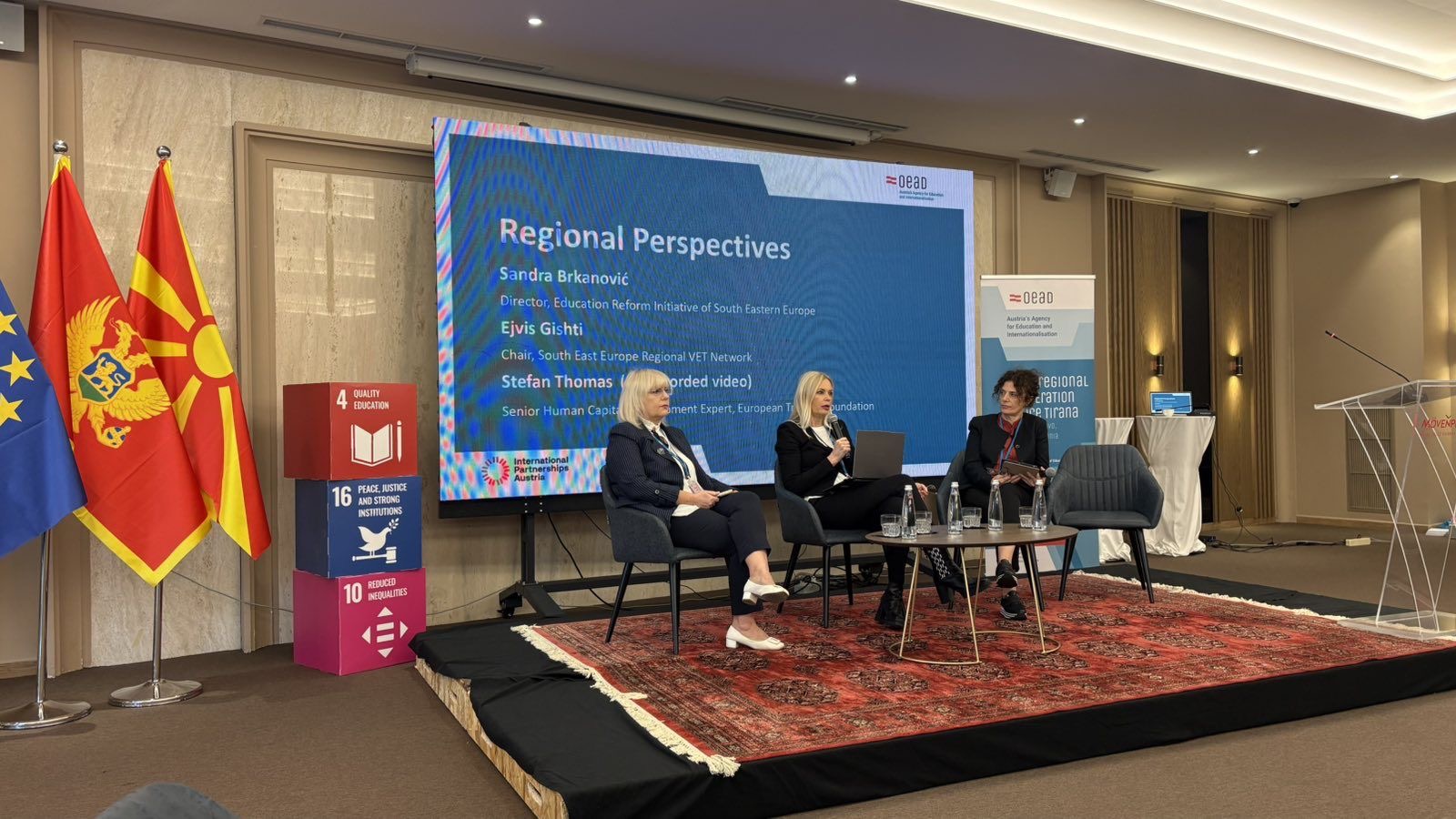
Sandra Brkanović, Director of the ERI SEE Secretariat, contributed to the panel “Regional Perspectives on Work-Based Learning”, together with Ejvis Gishti, Chair of the South Eastern Europe VET Network (SEE VET Net), and Stefan Thomas, Senior Human Capital Development Expert at the European Training Foundation (ETF), who joined through a pre-recorded contribution.
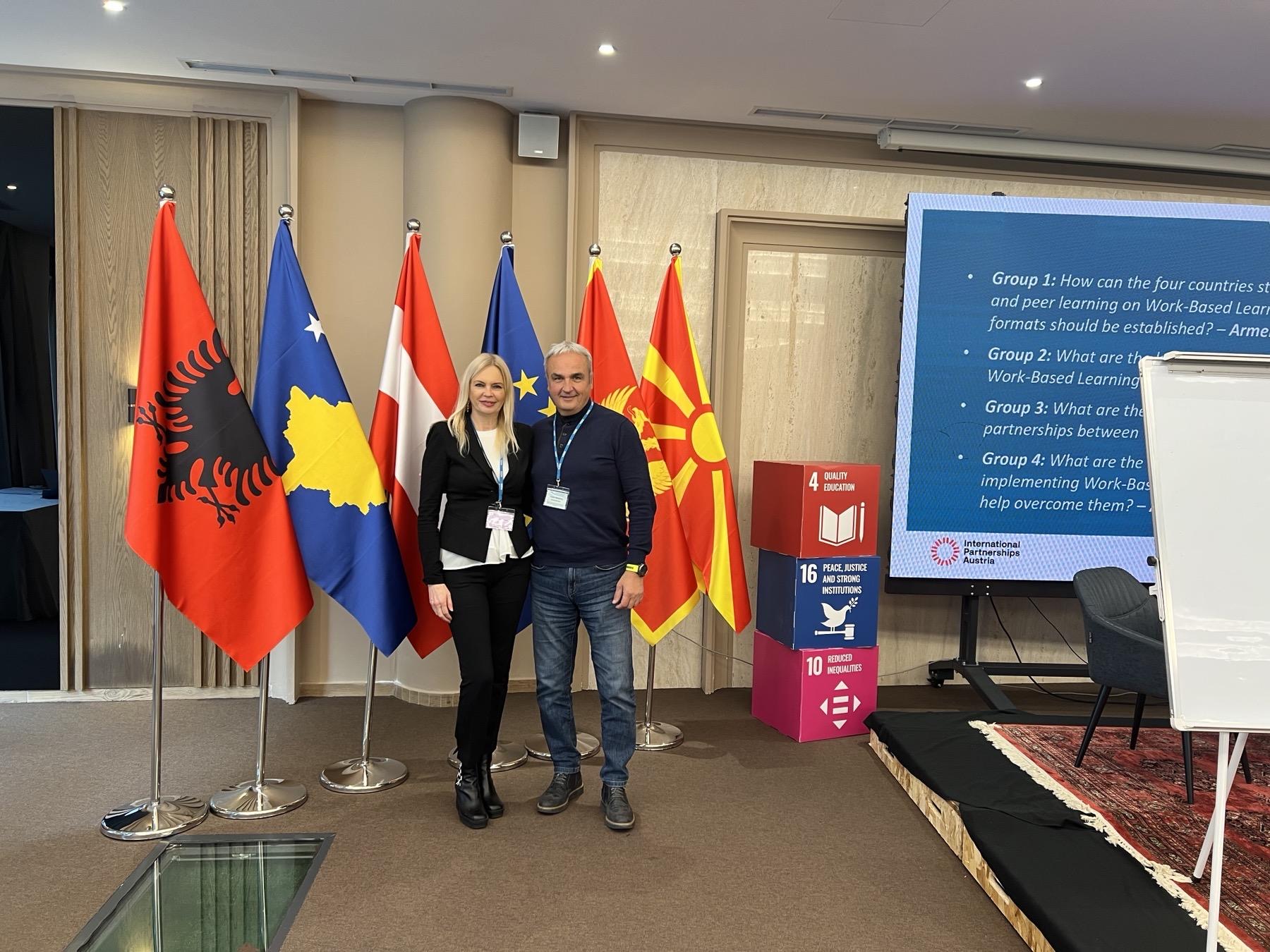
The dialogue also featured a panel with representatives of the ministries and institutions responsible for education and VET from Albania, Kosovo, Montenegro and North Macedonia. They exchanged national perspectives and experiences, followed by group discussions aimed at identifying common priorities and opportunities for regional cooperation in work-based learning.
Through country-focused discussions and working groups, participants explored shared priorities and possible areas for joint action. The exchange provided an opportunity to discuss how regional cooperation can support stronger links between VET and the labour market, with particular attention to the quality and organisation of work-based learning.
ERI SEE’s participation also builds on its ongoing regional work in VET and its coordination of the WBA4WBL network, which provides a platform for cooperation and exchange on work-based learning across the region.
